
The Opportunity
Improving Energy
Performance Through
Integrated Building Systems
Office buildings rely on many interconnected systems. From heating and cooling to lighting, security, parking, and elevators, all these systems influence energy use and tenant comfort. When these systems are managed independently, it can limit visibility into how buildings are performing as a whole and make it more difficult to optimize operations efficiently.
QuadReal identified an opportunity to bring these systems together, improving coordination, operational insight, and overall energy performance while maintaining consistent indoor conditions.
20%
Decrease in Equipment Runtime
200K
Hours avoided of unnecessary equipment operation
What
QuadReal
Did
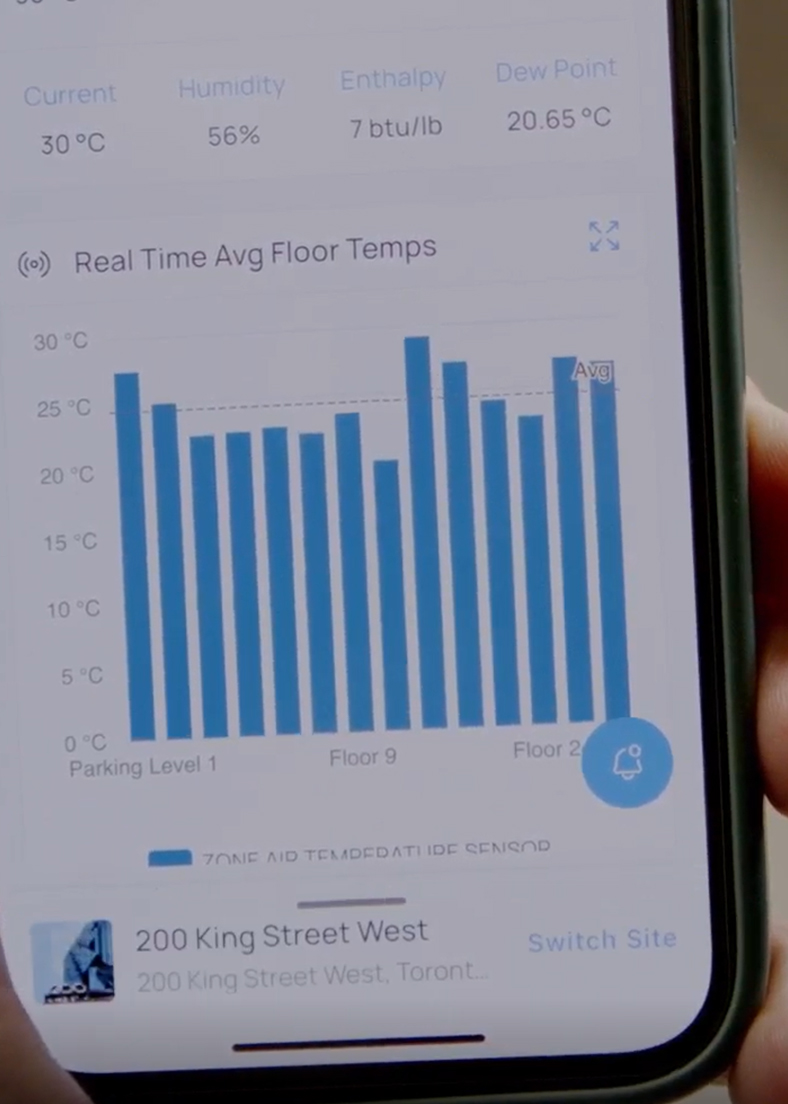
QuadReal implemented an Integrated Building Management Platform (IBMP) to connect base building systems into a single, centralized view. This platform brings together data from building automation and lighting controls, energy and utility metering, IoT sensors and devices, security systems, parking, elevators, EV charging infrastructure, and work order management tools.
By integrating these systems, building teams are able to monitor performance more holistically and apply automated system adjustments to identify inefficiencies. This enables systems to operate more precisely, reduces unnecessary equipment runtime, and identifies issues earlier so they don’t escalate.
The
Impact
Through smarter system coordination, participating buildings have reduced equipment runtime by approximately 20%, supporting lower energy use while maintaining tenant comfort.
Optimized system scheduling has also helped avoid more than 200,000 hours of unnecessary equipment operation, ensuring systems run only when needed rather than on fixed schedules.
Integrated monitoring enables issues to be identified earlier, supporting more reliable building operations and reducing the need for reactive maintenance.
Why
This Matters
Integrating building systems enables more efficient energy management and supports lower emissions, while improving reliability and day-to-day performance in office environments.
Better is Best Tip
Save energy in the office by turning off lights, monitors, and office equipment when they’re not in use, taking advantage of natural daylight where possible, and enabling energy‑saving or sleep modes on computers and shared devices to reduce unnecessary power consumption.
Integrated building systems deliver better energy use today for the best performance tomorrow.
The Opportunity
Balancing Fresh Air
and Efficiency Through
Demand-Controlled
Ventilation
In modern office buildings, occupancy patterns fluctuate constantly, meeting rooms fill and empty, hybrid work schedules shift daily demand, and entire floors can vary widely in use throughout the day. Yet traditional ventilation systems continue delivering a fixed volume of outdoor air regardless of how many people are actually present. During low‑occupancy periods, this often leads to unnecessary ventilation, driving up energy consumption without improving comfort or indoor air quality.
QuadReal identified an opportunity at a number of properties to make ventilation more responsive: Delivering fresh air based on actual conditions in the space, while continuing to meet indoor air quality standards.

What
QuadReal
Did
QuadReal implemented Demand-Controlled Ventilation (DCV) to enable dynamic adjustment of outdoor air based on actual indoor conditions.
Instead of relying on ventilation dampers that operate in fixed open-or-closed positions, the upgraded system responds continuously to real-time sensor data. Carbon dioxide (CO₂) sensors measure indoor air quality and signal ventilation dampers to modulate gradually as occupancy levels change.
When spaces are lightly occupied, the system supplies a minimum baseline of fresh air, aligned with recognized indoor air quality guidelines. As occupancy increases and CO₂ rises, the system automatically introduces additional outdoor air to maintain comfort and air quality. Once activity decreases, dampers reduce airflow again, preventing unnecessary energy use.
By shifting from a static to a fully responsive ventilation strategy, QuadReal can match fresh air delivery to actual building needs, improving efficiency without compromising indoor environmental quality.
The
Impact
This approach allows fresh air delivery to respond dynamically to actual occupancy and space conditions. By avoiding constant maximum airflow, systems can operate more efficiently while still maintaining comfort and indoor air quality requirements.
Demand-controlled ventilation also reduces the need for manual damper balancing, supporting more consistent system performance over time.
Why This
Matters
Smarter ventilation helps balance indoor air quality, comfort, and operational efficiency; an important consideration in office environments where spaces are used can change hour by hour.
Better is Best Tip
Using environmentally preferable cleaning products with low or no added fragrances helps reduce airborne chemicals, improving indoor air quality and creating a healthier workspace for everyone.
Indoor air quality conditions may vary based on building design, occupancy levels, and tenant operations; base building systems support, but do not replace, tenant-managed controls.
Demand-controlled ventilation works smarter, providing better comfort and the best energy efficiency.
The Opportunity
Diverting Organic
Waste Through
On-Site Processing
At some office properties, organic waste represents a significant portion of total waste generated. When sent to landfill, food and organic materials break down anaerobically, producing methane (a potent greenhouse gas) and contributing to avoidable emissions.
QuadReal identified an opportunity to explore whether organic waste could be managed closer to where it is generated, reducing landfill waste and associated emissions.
58K
Kilograms of organic material diverted from landfill
492
Tonnes of CO₂-equivalent emissions avoided
What
QuadReal
Did
At a pilot site, QuadReal implemented an on-site organic waste processing system that allows food and organic materials to be dehydrated and converted into dry organic matter. By processing organics on site, the volume and weight of waste requiring off-site hauling is significantly reduced.
Once processed, the dry organic material is directed toward productive end uses. A portion supports community-based food growing initiatives, while the remaining material is blended with other biomass and used as a renewable fuel source for heating industrial facilities.
This pilot approach demonstrates how organic waste can be treated as a resource rather than a disposal challenge.
The
Impact
Since implementation, more than 58,000 kilograms of organic material have been diverted from landfill at this site. This diversion represents an estimated 492 tonnes of CO₂-equivalent emissions avoided, based on reduced methane generation from organic waste decomposition.
Why This
Matters
Keeping organic waste out of landfill helps reduce greenhouse gas emissions and supports more circular use of materials. Turning food waste into a resource, whether for soil health or energy, demonstrates how waste strategies can deliver broader environmental benefits.
Better is Best Tip
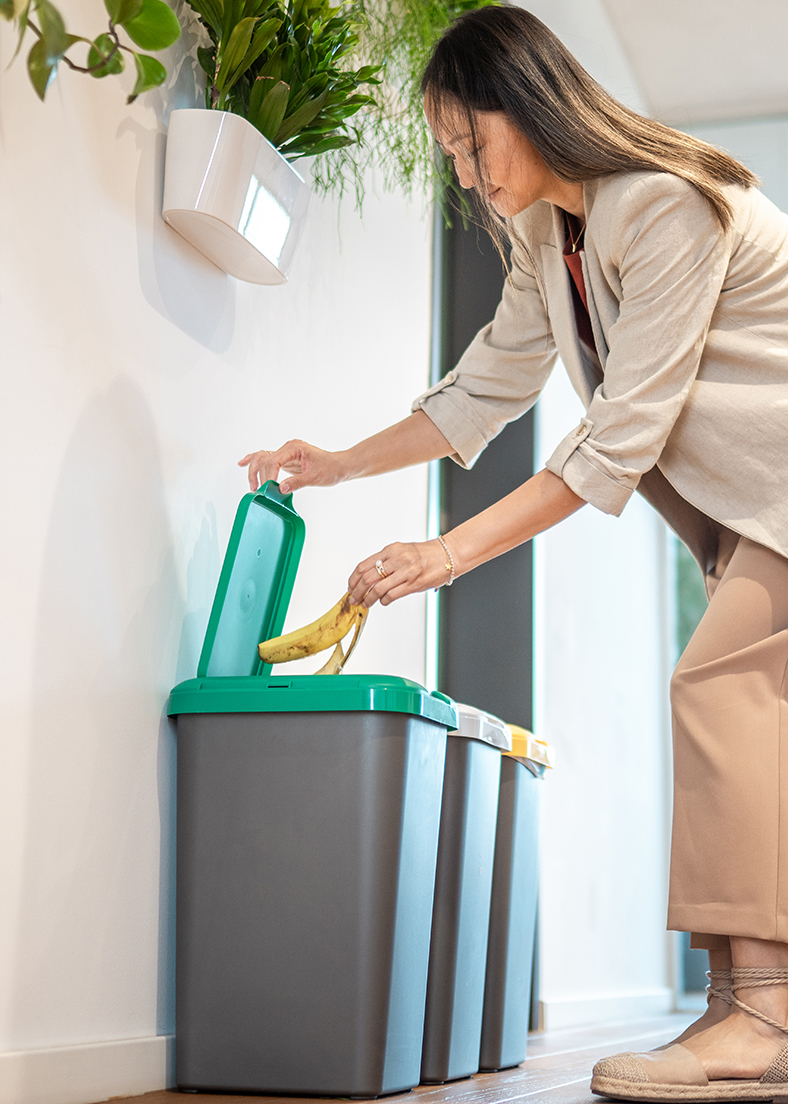
Use clearly labelled bins in shared kitchens and break areas to help keep food waste out of landfill.
Waste diversion and emissions outcomes may vary based on waste composition and site conditions.
Innovative on-site organic processing drives better efficiency and the best landfill reduction.
The Opportunity
Supporting Efficient
Water Use Through
Low-Flow Fixtures
Office buildings support daily use by a large number of occupants, making water use in shared spaces such as washrooms, kitchens, and common areas an important consideration. Older fixtures and appliances can contribute to higher water use over time, even when they appear to be functioning as intended.
QuadReal identified an opportunity to support more efficient water use in office environments by improving the performance of base building fixtures during routine upgrades and maintenance.

What
QuadReal
Did
As part of ongoing capital programs and preventative maintenance, QuadReal has incorporated low-flow taps, fixtures, and water-efficient appliances into office common areas where replacements or upgrades are required.
By embedding water efficiency into base building standards, these upgrades help reduce unnecessary water use while maintaining functionality and occupant comfort. The approach focuses on making improvements at natural replacement points, avoiding premature removal of equipment and unnecessary waste.
The
Impact
Low-flow fixtures help limit excessive water flow in shared office spaces, supporting more efficient water use over time. While individual fixture savings may be incremental, applying consistent efficiency standards across office buildings contributes to reduced overall water demand without disrupting tenant operations.
Why This
Matters
Improving the efficiency of base building fixtures is a practical way to support responsible water use in office environments, helping reduce demand while maintaining reliable, comfortable spaces for tenants.
Better is Best Tip
Turning off taps while soaping hands, washing dishes, or cleaning up, even for just a few seconds, can add up to significant water savings when multiplied across an entire office.
Water use outcomes may vary based on fixture type, occupancy, and usage patterns.
Better water use starts with efficient low-flow fixtures for the best conservation impact.
more case studies